Friday, October 31, 2014

Interview: Jiggley Jones

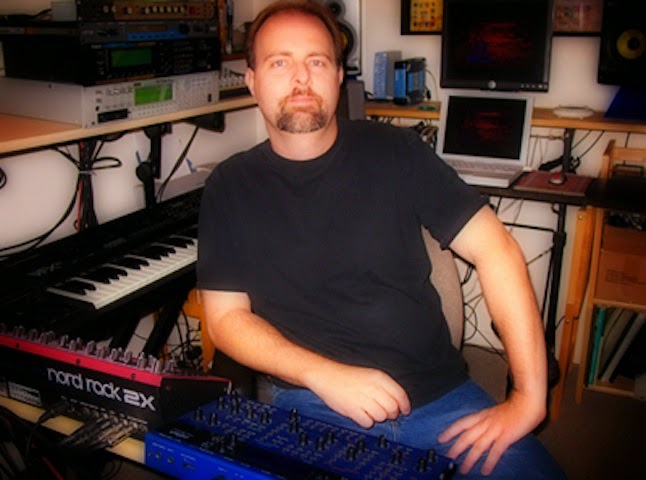
For this weeks interview, singer-songwriter Jiggley Jones spends some time with us talking about his craft, his voice, and even a little about his family. His newest release is “…A Mountain, A Struggle, A Tunnel, A Light…” available through iTunes. 


MW: Jiggley Jones, thanks so much for your time today!

JJ: My pleasure, thanks for having me!!

MW: I’ve enjoyed listening to your music, especially the songs on your YouTube channel especially the song “Ain’t That Alright.” I see your kids presence throughout the video – we’re they a big inspiration to the song?

JJ: Though they have been a major inspiration within my songwriting, on this particular song they were just used for the video because I like getting them involved as much as possible. This video idea was a more financially-friendly version of the original idea I had in my head that would have been a major undertaking. So I put this together on imovie and put my kids in it and it didn’t cost me a dime, haha ! … and it was fun for all of us.


MW: So, believe it or not, you’re actually the first country artist we’ve had on this blog (a long time overdue if you ask me). How do you feel about the change in commercial Country Music over the past few decades?

JJ: Because I certainly don’t consider my music to be straight forward Country, the changes have benefited me. All the branching out to slightly different sounds and approaches has broadened the listening audience in the Country genre. I think a lot of traditional Country fans aren’t too happy about that but Rock music is constantly seeing changes like this.

MW: I guess I call you “country” because that’s the closest genre that readers will recognize – but I hear a lot of other elements in your songs such as blues, folk, and even a little gospel. How do YOU like to describe your music?

JJ: It’s really difficult being in between genres sometimes. I think I would call it Folk Rock.

MW: I listened to “Modern Day Jesus” – one of the live videos on your YT channel – and I was thinking “wow, that is one hell of an upper range.” Did you have to work hard to develop those notes or have you always been able to do that?

JJ: Ironically that has always been a vocally tough song for me to pull off live. Sometimes if I’m not feeling it vocally on certain nights I will leave that song out of my set. So yeah it is hard work sometimes getting the voice to conquer those high notes.  

MW: Do you consider yourself more of a live musician?

JJ: No I wouldn’t say that, even though live performance is a definite part of who I am as a musician. I thrive on the recording process and the creative side.

MW: What artists were important to you while you were developing your style?

JJ: I always refer to Neil Young whenever that question comes up. Of course there are many more over the years. Maybe James Taylor and Led Zeppelin to name a few.

MW: What about now, are you a fan of anyone currently?

JJ: I actually like a lot of the newer Country acts like Zac Brown and Florida Georgia Line, etc…

MW: Your newest release is “…A Mountain, A Struggle, A Tunnel, A Light…” is a 6 track EP, can you talk about how this album came together?

JJ: I signed with my label Lamon Records Nashville in November of last year, put together a demo of songs for them to pick from and went down to Nashville in January. With Producer Dave Moody and a handful of session players we put together the songs for the record. Some of the songs were brand new and some I had been kicking around for a while. In February I went back down and shot the video for the single “Walk On Me.” Overall it was a great experience.

MW: Can you tell us about your best live show (so far)?

JJ: Well I had the privilege of playing at the last two CMA Festivals in Nashville. The first year (2013) I played at BB King’s place and 2014 I got a chance to perform at the legendary Earnest Tubbs Record Shop.

MW: …and do you have any events/projects on the horizon?

JJ: I have a few things coming up including the AMG Awards down in Charlotte, North Carolina where I’m up for “Male Vocalist of the Year.” After that I plan on “hibernating this winter and writing a bunch of new songs. We’ll see if that happens because sometimes opportunities sneak up on you out of nowhere and then you’re off on another adventure, haha.

MW: Jiggley Jones, thanks so much for taking the time to talk!

JJ: Thank you, I really appreciate it !!

Monday, October 27, 2014

Interview: White Bronco

Greetings readers! For this week's interview we are joined by Crack-Rock indie-band "White Bronco." They've just released a killer EP titled "White Bronco Lives" and were kind enough to spend some of their day talking. They're full of snark, but well worth the read!

MW: White Bronco, thanks so much for giving us some of your time!

WB: Time... Is never time at all... You can never ever leave without leaving a piece of youth... Thanks.

MW: Well you certainly win the award for most colorful off-the-hook intro...

WB: We try to start off all interviews with lyrics from the genius entity that is Billy Corgan.

MW: Who can argue with that logic? So, first off – I’d like for each of you to introduce yourselves and say what your role is within the entity that is White Bronco


WB: I’m Clark, I play bass/sing and occasionally expose myself when the moment feels right. Gus plays lead guitar and hasn’t been the same since ‘Nam. J-Money-Ca$h also plays guitar and likes to stalk Disney channel celebrities and Tantrum plays drums, and can only let him out of the dungeon during lunar eclipses.

MW: I read on your website that the name came from OJ Simpson’s vehicle that was used to evade police after Nicole Simpson was murdered. Do you think that story still has some captivating powers 20 years after the fact?

WB: First off, we can’t even be really sure that any of those events even took place. When media conglomerates get together and decide to pin an innocent, successful black man of a crime with an invented motive and lackluster evidence, we as a society always need to be skeptical and post two-hour long YouTube videos exposing the truths of the secret societies that truly run the world. Was Nicole Simpson a real person? Was OJ even driving this supposed “White Bronco?” These are questions we need to answer now, and not worry about the other frivolous media creations such as Ebola and ISIS.

MW: I get the feeling you’re not taking me seriously

WB: That’s just how I feel bruh, and besides, seriousness is the path for the mundane, which we feel is an issue that’s extremely universal in our generation of cleavage selfies and ABC sitcom quoting statuses.


MW: I’ve been listening to “White Bronco Lives” – your newest release – pretty much all week now. One thing that really captivates me is the spacey quality and almost futuristic texture of the music, especially on tracks like “Pretty Pixxxles.” Is that a sound you worked towards, or am I completely off?

WB: You’re so on you’re turning me on... When you take peyote in the studio, music sort of seems to perspiration out of you without even realizing it. We essentially woke up the next morning and listened to what we created, without having any recollection of recording it. Luckily it turned out to our liking, and the result was a spacey future rocking ode to pornography and self-indulgence.

MW: How do you handle the songwriting as a band? Is it primarily one of you, or do you have a more democratic approach?

WB: Gus is sort of, I guess what you’d call the leader of the band. He’s abusive, verbally and physically, and if one of us dislikes his songs, we’ll definitely receive a few lashings. But through Gus’s torment and sadism, it really drives us to work better at perfecting our craft, because we know the unfortunate consequences if we don’t deliver.

MW: Gus actually beats you?

WB: I actually shouldn’t be discussing this publicly, or else Gus might find out… Next question.

MW: So, full-disclosure, I had no idea what “crack rock” was prior to doing my research for this interview, thankfully we live in a world where “urban dictionary” exists. I thought we could save people the internet search and you could explain for our readers.

WB: Well, crack rock as a genre is sort of like smoking crack in itself. It’s disorientated, with limited ambitions, but true desires will be obtained through any cost. When we play our crack rock music, we want the audience to wake up homeless, with strangers and uncertain of their future, because structure is the blueprint for non-consensual servitude.

MW: Of course, it takes some degree of ambition to put out an album.

WB: Absolutely. We, like many citizens in the world, are forced to adhere to the realms of reality by grinding our lives away to the administrators of corporate fascism, in hopes of receiving subtle financial compensation that may eventually aid us in purchasing items that have no existential impact on the universe. This album was an attempt for us to temporarily escape the limited boundaries of this productivity paradox society we live in, and while ambition put forth toward publicly traded companies is wasted labor, the energy we gave to this project helped us see that true enlightenment can only be obtained through power chords, flanger pedals and Backpage groupies.

MW: As an album “White Bronco Lives” has a staggering amount of cohesion and energy – can you describe what the studio process was like?

WB: Besides the excessive amounts of peyote, there definitely was a lot of turmoil behind the scenes of this record. Between my own personal battles with Tinder, Tantrum being exposed to light, J-Money-Ca$h’s alleged manslaughter conviction and Gus’s four-year-old son showing up, it was somewhat difficult to put all these distractions behind us and focus on creating seductive crack rock music. Our producer Barrett really helped us through denouncing our demons and supplying us with more peyote.

MW: ...feeling a sarcastic vibe... I’m gonna go out on a limb and say that you are first and foremost a live band, am I right?

WB: Mos def homez. For starters, let’s just say that if I personally couldn't play a live show at least a few times a month, the Chicago murder rate would rise exactly .02%. Performing is in our blood, mainly because of the blood oath we gave in Somalia back in ‘94, which also resulted in an on-going hepatitis scare. We give it our all on stage, and we expect cheap handys and cereal necklaces in return.

MW: Any wild stories from the live scene?

WB: One time Tantrum bit a bouncer’s face before the show, and we were told we had to leave the premises immediately. Well we really wanted to play the show, so instead of doing what these pricks told us, we lured another opening band into an alley, decapitated their limbs, stole their clothes and gear and performed as them. If anyone asks us about our whereabouts the evening of September 13th, 2013, our manager Joseph Peckinpah will testify in court that we were at his apartment that night and we have no information on the whereabouts of the members of Ted Danson With Wolves.

MW: It’s a classic story – the opening band died for your sins?

WB: Sacrifices must be made in order for the prophecy of WHITE BRONCO to flourish.

MW: What’s on the horizon for you guys?

WB: Peyote, ethanol and obese Indian women.

Sunday, October 12, 2014

Interview: Vin Deca

For this week’s interview we have keyboardist, composer, and dance-music producer Mbachi Halle, but you all know him as Vin Deca. Vin Deca’s newest release “I Encourage You” is an exceptionally uplifting club number reinforced with lyrics of positivity and the need to stay the course in reaching goals.


MW: Vin Deca, thanks so much for joining us.

VD: Thank you very much for the opportunity and more so, thank you for what you do!

MW: My pleasure! So, I noticed from your bio that you are originally from Cameroon, how old were you when you left?

VD: I was twenty when I came to Germany.

MW: Ahh, so as a young adult… What kind of an impact do you think your African upbringing had on your music creation?

VD: We only learn from what others do or have done. In Africa, you get exposed to African music, and music from the rest of the world in exactly the same amounts. You grow with a wider spectrum and much more to learn from. In my time, Youssou N’dou, Henri Dikongue and Manu Dibango were just as popular as Michael Jackson, Stevie Wonder, Amit Kumur of Teri Kassam (India) and Joe Dassin.

MW: How old were you when you started on the keyboard, and how long was it before you started composing?

VD: I was twelve when I started playing. I started by playing only songs I really loved and made my own versions of every one of them. I was actually addicted to reconstructing people’s songs with keyboards and particularly one song, Elton John’s ‘Sacrifice’, even cost me a year in school. We had a one-year-end-exam-system and during that period I couldn’t study anything. All I did was listened to, dissected and made very many different versions of ‘Sacrifice’. I failed the exam of course and had to repeat the class. It was not until sixteen that I started composing my own songs, the age when I started selling tapes of my music.

MW: Was there anyone in particular who really encouraged you in your music as you were growing up?

VD: I grew up in one of the first commercial recording complexes in Cameroon, Bel-Pen Recordings; a label and production house that my father owned and ran. We had musicians living with us all the time, which meant we’d play with them all day long but my father didn’t like us spending too much time with them. They were very irresponsible and he didn’t want us to end up like that. They did things like get neighborhood girls pregnant and plant Marijuana on his property. He tried all he could but it was impossible for him to stop us from playing too much with them. Nuks, now a drummer in London – my brother and I will sneak out all the time, hang out and go with them wherever they went to play music. My father finally gave up trying to stop us and fully made us a part of the whole thing. I actually was head of the company until I traveled to Germany.

MW: Wow, that is quite the exposure - Speaking of “encouraging,” your new song “I Encourage You” is a great track, from the production, to the beat, and of course the vocals by Myra Maimoh are very captivating. Can you talk about how that song came together?


VD: I wrote “I Encourage You” sometime around 2006 when I was going through one of those very challenging periods of my life career wise, and had it recorded by a local artist. The meaning of that song became very clear to me in 2008 when I lost studio gear worth ten thousand euro that I sent to London and it never arrived. I was very devastated and strangely enough, “I Encourage You”, a song I had written was one the things that had a very healing effect on me. Because we felt that the song may have the same impact on many, Myra recorded it for her 2010 album “Answer’d Me” and it spent over two months on the NCM charts. It was also the most downloaded song after the single “Killing Me. I found out from checking all my music sales statistics that the song was still one of the most downloaded and streamed songs, so when the EDM bug bit me in 2013 and the label started an EDM division, it was clear that “I Encourage You” must be “EDMized” since its influence never reduced, even long after it was released in 2010.

MW: Does positivity in your music emerge naturally, or do you have to work at it?

VD: The desire and will to create stuff that must heal, build or inspire, and certainly not harm or tear down is my default setting – it is natural for me. The problem is just I could be writing powerful and positive words while using boring or negative instrumentation and inappropriate mixing techniques that would certainly skew the whole idea. So for it to work, the production part of my work must be somewhat conscious. These days, I try to create the music so it tells the whole story already. When words get in, they should only enhance the story and bring in more clarity.

MW: Shifting gears for just a second – Many of the people who visit this site are interested in the technical side of music making. Can you comment on your studio setup or any favorite pieces of gear?

VD: This is a question I was hoping not to get asked because I grew out of the religion called “gearism” but I still like knowing what people use, whose work I respect. So I’ll happily tell what I use too.

MW: [laughing] Please let me apologize for all the “gearists” out there!

VD: As far as I am concerned, room acoustics is the most important technical aspect of creating music professionally. Peter Karsten, a great acoustic engineer here in Germany transformed my room into one of the best sounding rooms I’ve heard.

As far as I am concerned, room acoustics is the most important technical aspect of creating music professionally. Peter Karsten, a great acoustic engineer here in Germany transformed my room into one of the best sounding rooms I've heard.

I compose completely in Logic (since version 4.0) with its inherent instruments, Ivory, Kontakt and all the standard stuff, and mix only in Pro Tools, which has a sound that I just simply love. I’ve been collecting samples for almost twenty years now and I have tons of them but I turn to them only when I can’t get what I need with keys and a bass guitar. My workflow is usually hybrid, going through Metric Halo converters. I love everything about those guys. I have almost all UAD plugins, Metric Halo and I also use Kush’s UBK 1, Altiverb and Soundtoys Radiator very much. But plugin compressors really still don’t cut it completely for me! Sorry about that. I find they lack something I refer to as dynamic stamina. I get work done with them no doubt but “affection”, I get from outboard gear like 1176’s, IGS Audio Compressors, BAE, P3S (magical bus compressor), some EQ’s - mostly the standard stuff. I have a thing with cables too. My whole setup is wired with Vovox cables, except headphone connectors.

MW: That sounds like an extraordinary setup! …Thinking about being in the studio, I’m curious how often you collaborate? Does it ever lead to issues in the studio or in the creative process?

VD: I use to collaborate a lot in the past but I stopped. All it brought me was trouble.

This was the typical scenario:  someone who doesn’t play any instrument hears some music in their heart, head or whatever. He tries to communicate to you what to play but has no terms to describe what he wants. He gets frantic that you do not understand him and as a result, the genius insight the world was waiting for is about to dissipate. And there was also all the politics and ego madness, especially when there is the thought of the smell of success in the air. I hated it.

These days I prefer only able mentors who criticize me. Those who can tell me exactly what is not working. They purify my work.

When I get hired by composers to complete stuff, which happens very often, and which I really enjoy, I still try to avoid being in a negative environment while I am creating so whenever possible, I prefer to shift files to and fro with updates until they get satisfied.


Also, before I get to great stuff, I make a lot of mistakes and I need them. I love being in the studio alone where I have enough room to fail myself into great stuff. 

MW: You’re very gifted with the purely instrumental tracks as well – I listened to “Angel Talk” and was just thrilled with the energy of that track. Can you recall the first time you really felt a composition “work?”


VD: That’s certainly one of the most brilliant and difficult questions I’ve been asked!

MW: Thanks, I try.

VD: I made a song called “Do or die Thing” which got me a lot of attention from the music industry around 2002. I had really no clue logic wise what I was doing but the song was stunning. Then I started being too rational and somehow still felt everything I did was great and worked well but industry professionals like radio people showed me quality problems with my work. They were always right. It took me ten years to learn how to feel again while staying rational where I had to.
The problem was I worked a lot as a mixing engineer and that used to get in my way as a composer. It was my blessing but it did curse me quite a bit since I could not think or feel pure music with my own stuff. I’d compose a great song and dance or move to it while I produced it. But then when I finished mixing it, the song became void of life and emotions. Luckily, I discovered the trick not too long ago:

The gear was there to help me become one with the music!

Beside the technical necessities, it was all about doing absolutely everything possible through the mixing process to make me dance and move even more, and when I’m done, I shouldn’t be able to sit still. The first time I experienced that was with “Angel Talk”. 

MW: So, what’s next for Vin Deca?

VD: I desire to contribute significantly to electronic dance with the next releases in an original way and I will work relentlessly on that. With your help of course! I know how difficult this is and I say it in all humility but I am tired of what this genre that just captured the world is becoming. EDM is literally cloning itself out of existence. If we continue like this, we would not even need another Steve Dahl to tear us down for we are already doing it by copying ourselves so shamelessly. I will concentrate more on using different influences like African or tropical as a humble attempt to bring in more color to EDM.

MW: Vin Deca, thank you so much for your time!


VD: I thank you too very much, especially for asking such brilliant, relevant and deep questions. Keep up!  

For more information about Vin Deca please visit his website here: www.vindeca.com

Saturday, September 27, 2014

Interview: King Fernand (Happiness to Life)

For this week’s interview we have King Fernand, an accomplished guitarist, singer/songwriter from the Indi-Rock band “Happiness to Life.”


MW: King Fernand, thanks for taking the time to talk to Current Music Thoughts.


KF: Well , thank you so much for having me on Current Music Thoughts.I appreciate it.


MW: I noticed from your bio that you actually have a formal music education from both LaGuardia College and Plattsburg State University. How do you think that colors your approach to songwriting?


KF: Yes that does play a factor whether I am at home writing music or at the studio, specially when I am writing parts for other instruments besides the guitar, such as violin, harpsichord .Whether I am writing a three parts harmony , or I am applying chord substitutions for an arrangement


MW: I think it’s incredible that you write for harpsichord! - You’ve played with some impressive folks – F.S.B., Spirit 9, and Raging Storm – do you tend to take a lot if inspiration from your colleagues?


KF: I have learned so much from many of the musicians I played with in the past -and currently - and I am grateful those musicians came along my path and inspired me.


MW: I was also reading about some of your favorite acts, which certainly runs the gambit, from Marvin Gaye all the way to Imagine Dragons. Have your tastes always been so eclectic?


KF: Well, since I was about 7or 8 years old I had great appreciation for different styles of music and  as I get older my appreciation for music continues to expand and throughout those years my tastes have been eclectic .


MW: I’d like to talk about your guitar playing for a bit – could you tell us all what your favorite axe is?


KF: Great, I love this question, without a doubt: FENDER STRATOCASTER

MW: When did you start playing?

KF: I started to play guitar when I was in High School. I used to watch one of my friends playing the guitar all the time, then one day I went to a music store and bought a guitar.


MW: Let’s talk about your new single “New Age.” How did that song come about?


KF: Well, I had the title “New Age” for a while. I was not so sure exactly how I was going to structure the song, not so much the music but the lyric, then one day I sat quietly with a recorder and I kept strumming the guitar and singing along .Afterwards, I listened back to the recording and chose the parts that I liked best.


MW: Interesting – that kind of leads me to my next question - One of the first thing that struck me about “New Age” was it’s very unique speech rhythms in the lyrics – did that come about naturally, or is it something you’ve had to hone?


KF: As I mentioned in the previous question, I sang the song a few times because that day I felt I had something good cooking in the stove. Then I listened back to the recording and I noticed all the parts that I needed were in place.


MW: You must be tickled that GlitterandStilettos.com took a look at your new album. She’s one of my favorite music bloggers by-the-way. To quote her: “Illustrating the multidimensional sound of the band, the song (“New Age”) captures the elements of classic rock, funk, and contemporary styles of music (GlitterandStilettos.com July 4 2014). How does it feel to be looked at so favorably by such a popular writer?


KF: I think I am at the right place at the right time, but seriously I feel very honored that my music has popped up along her way. She is truly amazing to say the least.


MW: Are you performing live these days? If so, where can we see you?


KF: I am in the process of rehearsing the entire album with some new members and talking to booking agents to try to get a good deal because at this present time all of my band members are hired musicians. I will definitely keep you posted.


MW: Please do! So, what’s next for “Happiness to Life?”


KF "Happiness To Life "is in the process of promoting the album, such as: trying to secure college and public radio plays, booking gigs and tours etc.


MW: That sounds awesome, thanks so much for taking the time to talk today!


KF: I thank you for giving me this opportunity and continue on with this great job you have been doing for the community. Take Care.

To learn more about Kind Fernand and Happiness to Life, please visit their website here: http://happinesstolife.com/

Friday, September 5, 2014

Interview: Alpha Wave Movement

Alpha Wave Movement is the nome de plume of composer and instrumentalist Gregory Kyryluk. He was kind enough to grant me an interview where we discussed his creative process, career accomplishments, and inspirations.


MW: Alpha Wave Movement, thanks so much for taking the time to talk about your music.

AWM: Thank you for your interest in my music.

MW: With only a first listen to your tracks it’s easy to hear a very symphonic element to your compositions. Is this something you went to school for, or did it emerge over time?

AWM: Actually no and my latest release although has symphonic elements is not atypical of most of my music. I mainly compose more sublime music that retains the improvisation aesthetics but with a sense of inward tranquility as with Eolian Reflections,Yasumu and my side project as Within Reason. The symphonic elements of Horizons is mainly my interest in the melodic interplay and strong thematic motifs in music. I grew up listening to John Williams and Jerry Goldsmith film composers which were early influences before I discovered New Age, New Wave and later progressive rock. I never went to school to study music seriously but was always drawn magnetically to it like a river to an ocean.

MW: Many of the people who come to this blog are interested in music production, could you tell us a little bit about your studio set-up? Do you have any favorite pieces of kit?

AWM: Well I am not actually an engineer by trade more via osmosis. I record using my best judgment levels, eq etc and then all the results are recorded direct from the board into my Pro Tools setup. Nothing really fancy or bank busting Abbey Road-esque. I over the years simplified and down sized everything to bare essentials so that my recording set up is easily portable. I like working quickly and in the moment. You would be surprised what you can do with just a hand full of gear from creativity to a finished product. The latest and greatest gear addictions are not really of interest to me. It’s all about using what I have at hand and stretching the imagination. I still use some really old synths form the 80s that are a part of my sound the Ensoniq ESQ-1 and Novation Nova are always working within the realms of my creative muse.

MW: I hope you will forgive me if I make comparisons, but there does seem to be a strong connection between your sound and the synth composers of the 1970’s such as Jarre and Vangelis. How would you feel about people drawing those parallels?

AWM: I take that as a compliment! Although Vangelis is very well known in the states for his music in Chariots of Fire etc Jean Michel Jarre I think never really caught on but the two of them have a knack for drawing these beautiful melodies out of the ether and incorporating that sense of composition into modern technology. They do not limit themselves to traditional instrumentation i.e. acoustic instruments and the atypical form and function of what music "is" supposed to be according to societal indoctrinations. I can relate to these composers as much as those jazz musicians of the 1960s who took a deep dip in the sea of improvisation.

MW: Are there any current artists or genres you’ve been enjoying?

AWM: My musical listening taste is all over the map. I will listen to older ECM (a classic German jazz label that never followed tradition) jazz artists like Ralph Towner, Eberhard Weber, Pat Metheny Group albums then onto dub techno like the Segue, BVdub and classic Jamaican Dub like King Tubby. I have also taken interest in the minimalist genre of music like Peter Michael Hamel's work with the German ensemble. Between and Terry Rileys Rainbow in Curved Air. I basically get drawn to music with atmosphere, melodic content and the use of modern/older technology in a very aesthetically pleasing way. I am also very keen on 1970s progressive rock not for its pomposity but for the use of technology that did not further "hipness" of the times. I view music like food subjective to each persons audio palate!

MW: In any one of your pieces there are a number of themes and transitions, not typical at all for today’s electronic music. Could you describe your process for composing works and putting them together?

AWM: I don't usually follow any sort of popular formula or structure when composing especially since the 3-4 minute pop song is not my cup of tea. Sound and rhythmic elements are key to inspiring me such as a certain percussion sample of synthesizer sound. I also enjoy incorporating the natural world into my music and try and use various elements of field recordings to enhance and articulate my point. Much of my music comes thru I guess my consciousness trying to tap the atmosphere of being someplace maybe in a metaphysical sense and then transferring the feel/emotion into a sort of ambiguous sound sculpture. The music really comes about and forms itself during a sort of automatic state of creativity. I do not have much formal music training but I understand how to structure music and compose a melody which I guess is really an autodidactic sort of way I do things.

MW: Do you ever use studio musicians or are you entirely self-contained?

AWM: I have collaborated in the past in various projects such as Thought Guild which was a vintage synthesizer improv collaboration as well as working with a few other musicians in the field of electronic music. However, I prefer the freedoms of working solo and not adhering to any one sort of style of music or others interpretation of what the music has needs to be. What many listeners out there don't realize is that contemporary instrumental and electronic music varies quite a lot and within this genre there is a lot of creative space from which one can co-exist. The genre is really a microcosm of creativity.

MW: I’m curious how you feel about the need for technological expertise on the part of today’s composers?

AWM: I think technology is wonderful and I thank the engineers and musicians who made it happen. The synthesizer and digital recording devices make creativity from start to finish much more accessible to those of us on a small budget. I believe because of technology many DIY musicians began to walk their own paths bypassing in a sense the "traditional" methods of music composition.

MW: Do you ever feel like you have to be more of an engineer than a musician?

AWM: Both. As mentioned in the last question I am still an independent musician after 20 years I am not really working for a label except my own and at times reeling music on a friend’s label. I compose, record/engineer, create the graphics and promote my music. I have been running my small label Harmonic Resonance Recordings since the mid-1990s to allow me total freedom over my music releases. I believe many of the DIY musicians work this way and I think that’s what I enjoy is the purity of the music and product that is the end result. There’s less money or ego to drive the music!

MW: You just released your album “Horizons,” (on Sept 1 2014) which seems like it was an incredible task to compose – I’m guessing from listening to it – could you talk a little about the album coming together?

AWM: Most of the music I release comes in phases. I sometimes will compose and record very uptempo moving music and at other moments the music is very subtle and meditative. The tracks on Horizons where recorded over a period of years and then assembled into a much more fluid track order. Back about ten years ago I had started work on a one off sort of electronica meets progressive rock cd called "The Mystic & the Machine" not long after that release I would compose not consciously just by sheer momentary inspiration more of that sort of more structured space themed music with rock style energetic drumming. I have been a fan of Ozric Tentacles since the 1990s as well as growing up listening to early Tangerine Dream and Steve Roach. Horizons sort of merges those aesthetic principles together into the music.

MW: To me, track number 2 “Traveller” is a real stand-out piece in a very ambitious and quality array of songs, could you talk about your inspiration for that one?

AWM:  Traveller is also one of my favorite compositions on the release as well. Inspiration I think again probably my love of space themes in some of the music I admire and grew up with and merging that sort of floating cosmic sound (if there is such a thing!) along with the tribalistic sound of drums pushing the music forward on a course for somewhere out there wherever the listener wants it to take him/her.


MW: Shifting gears for a moment, I wanted to talk to you about your contributions to the gaming and film world. Especially when it comes to the inclusion of the track “Artifacts and Prophecies” in the Grand Theft Auto franchise – no small achievement by the way - how did that great opportunity materialize? Do you have any plans to seek more of these kinds of outlets?

AWM:  Thanks for the question. About 6 years ago I received an email solicitation for my music and like many I wrote it off as spam but I did not delete it. Curiosity got the best of me and I open the email to my surprise it was not spam but Rockstar seeking my approval to use a track from my 1995 release Transcendence for their video game. I am honestly not a gamer, well not since the Atari, and had no idea who Rockstar was but I reached out and contacted them. They were receptive and offered a great opportunity to expose my music to listeners who might never have heard of Alpha Wave Movement. To this day I don't really know how Rockstar found my music but my hunch is My Space which back in 2007-2008 pro to Facebook was "the" place to have your music promoted.

MW: Another notable feather in your cap was inclusion on the True Blood soundtrack – this was from your “Open Canvas” days. What I find most interesting about this track was the North Indian Classical elements. Do you still use world instruments in your music?

AWM: Open Canvas was a sort of outlet for my interest in taking traditional instrumentation, rhythms etc from the east and incorporating a hybrid electronic/ethnic music. I was always interested in the music on India, Middle East and ambient aesthetics. Although I have never visited India or the Middle East it’s the cultural history/legacy of such ancient instruments and the language they speak that continues to lure me into their realms of sound. Open Canvas was the fruit of that labor of which the US label Waveform was kind enough to release which consisted of my debut Nomadic Impressions (1998) and Indumani (2000) the follow-up. Well Waveform somehow made a Hollywood connection and was offered to license the track Ojopati for the final season episode 3. It was fascinating to see something I had composed used in another medium like cable television. That alone was very gratifying.

The Open Canvas project was a trilogy of three releases but although that chapter is closed I do still incorporate "world" or ethnic sounds into my music. In fact Yasumu (Japanese for letting go) has elements of koto, table and assorted gongs I utilized to convey that zen like eastern meditative spirit in the music. Great question.

MW: Do you ever play live shows? How do you manage so many parts in a live environment?

AWM: I have performed a few live shows over the last decade but to be honest there are performers and there are composers. I can honestly convey to you I am feel comfortable wearing the composers shoes than out there performing in front of an audience. It’s never been a form of artistic release for me to perform live.

MW: So, what’s next for Alpha Wave Movement?

AWM: I have another release in the works which is much more restrained on the percussion side and a dense darker space music album. I have been working on that over the last year incorporating an old ARP Omni analog string synthesizer into the mix for that “vintage" sound. I also have a side project Within Reason which is my ambient/dub minimal tech electronica. Music for a fifth release will begin soon for a 2015 release.


To hear more from Alpha Wave Movement please visit his website here: http://hrresonance.bandcamp.com/

Monday, August 18, 2014

Interview: Devin Tait and the Traitors

This week we’re lucky to be graced with another electronic band – the second one is this blog’s history. I’d like to introduce to Current Music Thoughts readers Devin Tait and the Traitors.


MW: Thanks for taking the time to talk.
DT&TT: Thank you for talking to us!


MW: So let’s dive right in, your new single “Now I Know What I Want” video was released in late July 2014 accompanied by a whimsical and charming video. Can you tell us how that all came together?

DT&TT: Devin wrote the song and we have been playing it live for a while now.  Jarod helped come up with the idea and the locations for the video and it all came together from there, with help from Mélodie Simond and Rick Skrip, who have directed several projects that some of us have been involved with previously, doing the camera work and helping with set up and all.


MW: I see from your videos on YT that Devin is quite the Keytar fan – do you have a particular one that you are fond of?

DT&TT: Yes, my latest one is a Roland Lucina and it’s been great because it’s got the sounds on board rather than having to run through a sound module like my last couple had been.  Actually, my last one was a Rock Band keytar that happened to be MIDI capable.  I covered it in rhinestones.


MW: Many of the readers for this blog are production junkies, can you describe your creative process in regards to the tech you use?

DT&TT: Devin and Brandon do most of the recording.  Devin uses Logic Pro X now to record his synth and vocal parts, as well as Jarod and Liana’s vocals.  Brandon records his own bass and guitar tracks, and they work together to record the drums.  For several songs, including “Now I Know”, we went to Ditch Road Records studio in Simi Valley and worked with Ryan Canestro.  Brandon produces music for his own band, Turbo Sunshine, so he’s always been very helpful with the technical aspects of the recording and live set-up.


MW: I wanted to give you some big kudos for having a live drummer in a genre where the drums are so often sampled or synthesized. I’m curious how Myles can to be in the band?

DT&TT: Well we love dance music and new wave music and the live drums are an important aspect of the sound that we like.  So, around the time the Traitors formed, Myles obtained a drum kit.  We always wanted Myles to be in the band but he had to get to the point of feeling comfortable and confident behind the kit.  Once he was, he started performing with us and now we are starting to rely less on backing tracks and focusing more on playing totally live.  Myles is a VJ / DJ so he has a vast musical knowledge that he can draw from when coming up with the beats.


MW: It was awesome hearing Liana sing the breakdown for “Now I Know What I Want” – do you think you will be employing her sassy alto more often?

DT&TT: Definitely! Liana joined after Devin’s debut album was already recorded, but we’ve been writing the new album together so that there’s room for Liana and Jarod to shine.  There will be at least one song on the album for each of them to sing lead on.


MW: Are there any musicians/bands from the past that you find particularly inspirational?

DT&TT: We all have different influences and inspirations but in general most of us can all appreciate a good, catchy pop tune.  Some classics are Prince, Spice Girls, Madonna, Duran Duran, Scritti Politti and Aqua.


MW: What about current acts?

DT&TT: Some current bands that some or most of us enjoy include The Naked & Famous, Capital Cities, Scissor Sisters, One Direction and Electric Six.


MW: I noticed that in the bio section of the page that Jarod Millsap is listed as “choreographer.” How elaborate do you plan on making your live performances?

DT&TT: He’s not only the choreographer but he’s also the director of visuals.  Because he’s been a performer and has a theatre background, he helps to think about the way the show looks from a visual standpoint.  He has done choreography for “Now I Know What I Want” and we plan on incorporating some easy dance moves into more of our songs, kind of like Bananarama.


MW: Of the live performances you’ve had so far, are there any moments that were especially memorable?

DT&TT: I think we’d all agree that the LA Marathon was the most memorable gig so far.  We started so early in the morning, and for three hours we just kept playing and keeping the runners pumped up as they would pass by, as well as entertaining the spectators who were out to support the runners.  Having an audience who only will see you for a few seconds but is relying on you for a little adrenaline boost meant that we had to make every moment count! 


MW: What advice would you give to aspiring singers/performers?

DT&TT: Believe in yourself, support and collaborate with your peers, and make sure you develop other marketable qualities just in case.


MW: So, what’s next for Devin Tait and the Traitors?

DT&TT: We will be releasing new songs and videos in the coming months and will complete our album “Mixed Signals” possibly before the end of the year. And we’ll continue to play live as much as we can.

To learn more about Devin Tait and the Traitors, please visit their website here: http://www.devintait.com/

Wednesday, July 16, 2014

Interview: Aztec


For this week’s interview I’m thrilled to be able to introduce an incredible indie-rock band from Canada; let’s get to know Aztec. This marks the first ensemble interview for this blog – which is awesome! We can start by hearing their most recent track “East” available from their BandCamp website. This song is the first release from their forthcoming album “Stitches” due out on July 11th 2014.


MW: I’ve noticed there is precious little on your website about you as individuals, it would be nice to get briefly acquainted with each of you. Let’s do this – why don’t we go around and have each person state their name, instrument, and how they got started playing. (Here is where each band member could write no more than a few sentences just to get things started)


KS: Well I’m Kyle Schepens, I’m the singer/song-writer and I play guitar in the band too. My first instrument was drums when I was 5 or 6, I didn’t get into playing guitar or writing until I was about 12.


SS: I'm Saul Sitar, I play lead guitar and sing harmonies. I didn't start playing till I was about 15, but had my fair share of sleepless practice nights throughout high school to make up for it. Haha.


PG: My name is Patrick Gleeson, I play bass for Aztec. I come from a musically inclined family, my dad and uncle got me my first drum kit at 3 years old and I have been playing since. I got my first guitar, a Fender J-Bass V, at 13 and have since tried my hand at guitar, piano and singing. I recently picked up a Tele bass, and I am stoked on it!


AB: I`m Amber Banman, drummer for almost 10 years now, started out with an all girl punk band waaay up north and moved to where Aztec is located about a year ago. I knew Kyle through mutual friends and joined the group early this year.


MW: Great, thanks for that! Can you tell us how you came together as a band?


KS: I was at a point where I really wanted to make something that had a chance at gaining traction. So after my folk project disbanded I met all the guys now involved in Aztec and we started taking things a bit more serious.


SS: I spent a few years drifting through various metal, rock and ska projects, none of which had much longevity. Since the beginning I was looking for a group of people willing to work hard toward success. I feel this is it.


PG: I had been playing a lot of solo acoustic music in the past few years, and was really wanting to branch out and become a part of something more focused. I fell in perfectly with Kyle and Saul pretty much from the first time we jammed; it just felt natural.


MW: Now, I was curious about the creative process in coming up with material. For instance, are the songs written as a group? As individuals? A mix?


KS: For the majority I would come with a song I had already written, or even just a riff I thought sounded cool then we would build upon that. Saul also brings great progressions to the table too, it all starts with a rough idea then we apply it to a structure we like and go from there. Though I do all the lyrical writing for the band.


AB: I would say Kyle and Saul are the brains for the material, they will usually introduce a song to me once it`s roughly done, and then I put my spin on it and add something powerful to the mix by hitting things hard haha with a purpose of course.


MW: Do creative differences ever come about? If so, how do you handle them?


KS: Yes, sometimes. Everyone in the band has some different playing styles for sure. We just talk it out and stay focused on what we’re making.


SS: Certainly, which I think is pretty important to the collaborative flavour of it. The creative brainpower of four people is better than one. Personally, I went to school for classical guitar and had a knack for progressive rock/metal. I think the diversity among backgrounds is what brings about cool offbeat ideas instead of recycled influences.

PG: Usually with a fight to the death. We lose a lot of good drummers that way…


AB: I think we all have our own idea of ``the ideal sound``, but for this project we`ve all had like minds and worked very well together, by keeping the EP`s overall sound and story in mind


MW: I would like to discuss “East” – that is a great track - almost reminiscent (I hope you won’t take this the wrong way) of indie songs from the 1990’s… to me anyway. Can you talk a little bit about how that song came about?


KS: It’s a song I wrote a while back, and used to perform when I was playing a lot more acoustic shows. Pretty much we dissected it, changed some things around, re-wrote a good portion of the lyrics and then put it back together again.


SS: As with each track on the EP, it went through a lot of changes to get where it is now. With any well written song it's important to trim the fat and keep it strong. I think we managed to do that well with East and make a concise poppy track that packs a punch while still shy of three minutes in length.


PG: East has been slowly transforming since the original inception of Aztec. It would blow you away to hear it in its original form, but on the whole it has really evolved into a strong example of what we can do; I love how it runs the gambit from poppy to heavy and I think we have emphasized that well. I imagine our songs will remind a lot of people of a lot of different things, as our musical influences and individual backgrounds vary quite a bit.


MW: The mixing and mastering on the song is rather impressive – did you record it yourself or do you work with producers?


PG: The album was produced by Nathan Hussey, frontman for South Carolinas All Get Out at Archer Avenue Studios. He was great, really took us under his wing for the whole process. The recording itself was done at multiple locations.  

MW: Many readers who stop by this blog are interested in gear – and since you are all instrumentalists I was hoping you might mention your favorite pieces of kit.

KS: I play a tele thinline or standard and a hot rod deluxe amp. I love telecasters.


SS: Right now I run a Gibson SG through a Line 6 Spidervalve 212. That company gets a bad rap for amps, but with its Bogner designed tube section this one's got some great tones.


PG: Sure, as I mentioned before I am currently playing a Fender Tele bass, it’s a four string reissue of what is essentially the original P-Bass. I also play a Fender V J-Bass, which I love but find a bit heavy for performing live. I only use a little distortion and a tuner pedal, so my gear is fairly sparse in that department, and I play through an old blue carpet covered Yorkville amp, sometimes with an extension cab if need be.


AB: I play a Taye Studio Maple 5 piece. I love a beefy kick drum and snare.


MW: How often do you perform live? Are you on the road a lot?


KS: Quite a bit, though during the recording process of the EP we stayed pretty close to home.


SS: I love live shows, and we book them as much as our schedules allow. We've done a bunch of western Canadian dates, but we're aiming to extend our reach further in the near future.


PG: We have played all over the island and mainland, had some interesting shows along the way. Our whole mantra, if we have one, is to be that band that is even better live, to really leave everything on the stage. I don’t think we could ever be playing enough live shows, I’d live up there if I could!


AB: While we`ve been recording and finishing the EP we`ve been sticking close to home playing local shows, but with that close to being released the planning for bigger and better shows off the island will be our next priority.

MW: Are there any shows that are particularly memorable?


KS: I don’t think there is any one that really stands out. hmmmm, well I bailed on stage once not too long ago, tripped on a patch cord but I think I pulled it off, just kept playing on my knees.


SS: There haven't been enough wild things happen at shows yet, but I'd say each one gets better and great performances are memorable ones for me.


PG: New Year’s Eve in Tofino, we had a bit of a crazy lineup change that night due to unforeseen circumstances. I ended up behind the kit, sometimes playing bass as well, while the other two boys held it down with one acoustic and one electric guitar. It was a completely different set, really stripped down and we weren’t sure how people would react, but by the second set we realized everyone was dancing, rocking out and completely oblivious to how stressed we were; they were having a great time!


AB: It was actually the same show that Kyle tripped that I had a cymbal come off and flip towards my head haha, I managed to lean back and catch it in my lap but it was difficult to finish that song doing a balancing act!


MW: I want to go around in a circle one more time – could everyone name their top three creative influences?


KS: brand new, Manchester orchestra, all get out


SS: It changes quite a bit for me. I'd say while we were writing the EP I was listening to a lot of The Strokes, All Get Out, and The Front Bottoms.


PG: This is one of those difficult questions to answer, but as a bassist I have been influenced by the more unique and outstanding musicians that have taken the instrument out of the background; Geddy Lee, Les Claypool and Victor Wooten are the three that really stand out in my mind. As far as other groups, during this process All Get Out was a constant, Rise Against for the heavier side and Bright Eyes for getting in touch with the emo kid in me…


AB: Favourite drummer – Aaron Gillespie from Underoath, Bands would be Brand New, Motion City Soundtrack, Underoath(rip)


MW: Awesome! I know you have an album coming out July 11th of this year (2014) titled “Stitches” – what else is happening for Aztec?

KS: shows, shows, shows. Planning on a bigger tour of the states later this year. Writing for the next record.


SS: Lots of shows and writing for the LP. And definitely a tour south of the border.


PG: We will be diving right back into the writing process for our full length LP, and touring to support the

 EP. Hopefully a western Canada tour then off to the southern states for some good times.


AB: On the up and up, you`ll have to wait and find out!


MW: I’ll definitely be on the lookout for all of that, thank you again for giving us your time!


KS: thanks


SS:thanks


PG:Cheers..


To learn more about Aztec, please visit their BandCamp page: